Getting Ready to Apply: The Documents You'll Need for a Mortgage
You've decided to buy a home. You're excited, and you're ready to get moving. Then your loan officer sends you a list of documents to gather, and suddenly it feels like a mountain...

Midlothian · Community Photo
You've decided to buy a home. You're excited, and you're ready to get moving. Then your loan officer sends you a list of documents to gather, and suddenly it feels like a mountain of paperwork. Don't worry, this is a normal part of the process, and being prepared makes it go smoothly. Knowing what to expect ahead of time takes the stress out of it.
For buyers in the Midlothian area, getting your paperwork ready is a key step toward a smooth mortgage process. Here's what you'll typically need and why.
Why lenders need documentation
First, it helps to understand why lenders ask for all this paperwork. When a lender gives you a mortgage, they're lending a large amount of money over a long time. They need to confirm that you can repay it. The documents you provide help verify your income, your savings, and your overall financial picture.
This isn't about being nosy or making things difficult. It's a normal, responsible part of lending. And the more prepared and organized you are, the faster and smoother the process goes.
Proof of income
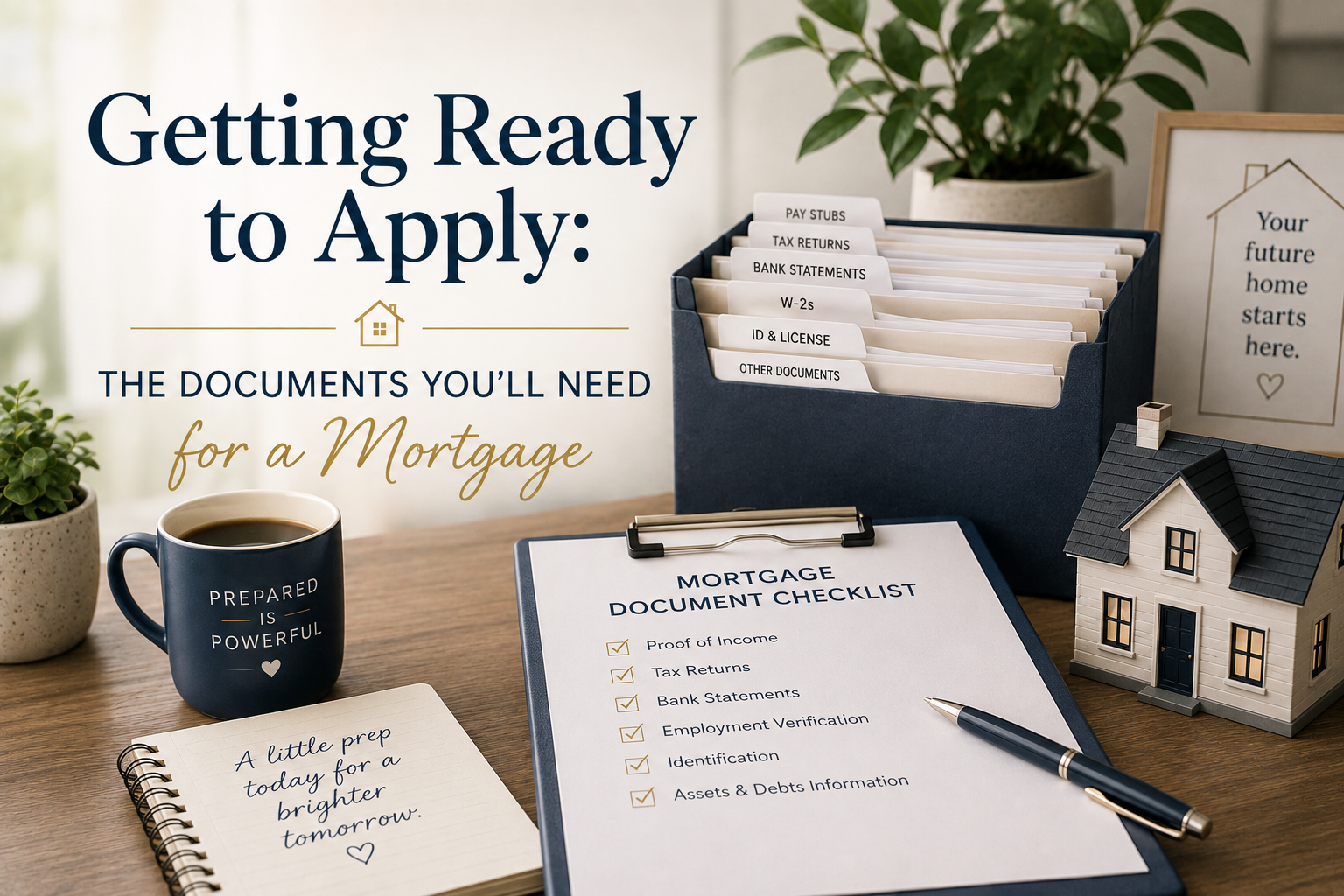
One of the biggest things lenders verify is your income. They want to see that you have steady, reliable income to make your payments. To prove this, you'll typically need to provide:
- Recent pay stubs, usually covering the last month or so.
- W-2 forms, generally from the past couple of years.
- Tax returns, often for the last two years.
If you're self-employed, the documentation is a bit different, often including business records and additional tax paperwork. A good loan officer will tell you exactly what's needed for your situation.
Proof of assets
Lenders also want to see your savings and assets. This shows you have money for your down payment and closing costs, plus a cushion for the future. You'll usually need to provide:
- Bank statements, typically for the last couple of months.
- Statements for other accounts, like investments or retirement funds.
One important tip: lenders like to see where your money comes from. If you have large deposits, be ready to explain and document them. This is a normal part of the process, so keep good records.
Proof of identity and more
You'll also need to verify who you are and provide some additional information. This typically includes identification, like a driver's license, and your Social Security number for a credit check. Your lender may ask for other documents depending on your situation.
If you're currently renting, they might ask for your rental history. If you have other financial details relevant to the loan, those may come up too. Your loan officer will guide you through exactly what's needed.
Get organized early
Here's the best tip of all: start gathering your documents early, even before you formally apply. Being organized makes the whole process faster and less stressful. Create a folder, digital or physical, and collect everything in one place.
When you have your paperwork ready to go, your loan can move forward quickly. This is especially helpful in a competitive market, where being ready to act fast can make a difference.
Keep your finances steady
While you're going through the mortgage process, it's wise to keep your finances stable. Avoid making big changes that could complicate things. For example:
- Don't open new credit accounts or take on new debt.
- Don't make large, unexplained deposits or withdrawals.
- Don't change jobs right before or during the process if you can avoid it.
- Don't make large purchases, like a car, until after closing.
Keeping things steady helps your loan go through smoothly. Your loan officer can advise you on what to avoid during this time.
Lean on your loan officer
The paperwork might feel like a lot, but you don't have to figure it out alone. A good loan officer guides you through exactly what's needed, answers your questions, and helps you stay organized. They make the process manageable and far less intimidating.
The Consumer Financial Protection Bureau also offers free checklists and resources to help buyers prepare. Used alongside your loan officer's guidance, they're a great help.
Juliet Ford with American Financial Network helps buyers in the Midlothian area navigate the mortgage process, including getting their paperwork ready. With clear, friendly guidance, the process becomes much smoother.
Preparation pays off
Gathering your documents might not be the fun part of buying a home, but it's an important step, and being prepared makes all the difference. When you're organized and ready, your mortgage process can move quickly and smoothly.
So start early, stay organized, and lean on your loan officer for guidance. With your paperwork in order, you'll be well on your way to the keys to your new home.
Get in touch
American Financial Network — Juliet Ford
Website: https://www.afncorp.com/web/julietford
Email: jford@afncorp.com
Helpful links
- CFPB mortgage document checklist: https://www.consumerfinance.gov/owning-a-home/
- Juliet Ford, American Financial Network: https://www.afncorp.com/web/julietford
Every Thursday — local news, events, deals, and new listings. Free forever.