The Most Common Places Pests Enter Your Home — and How to Seal Them Before Fall
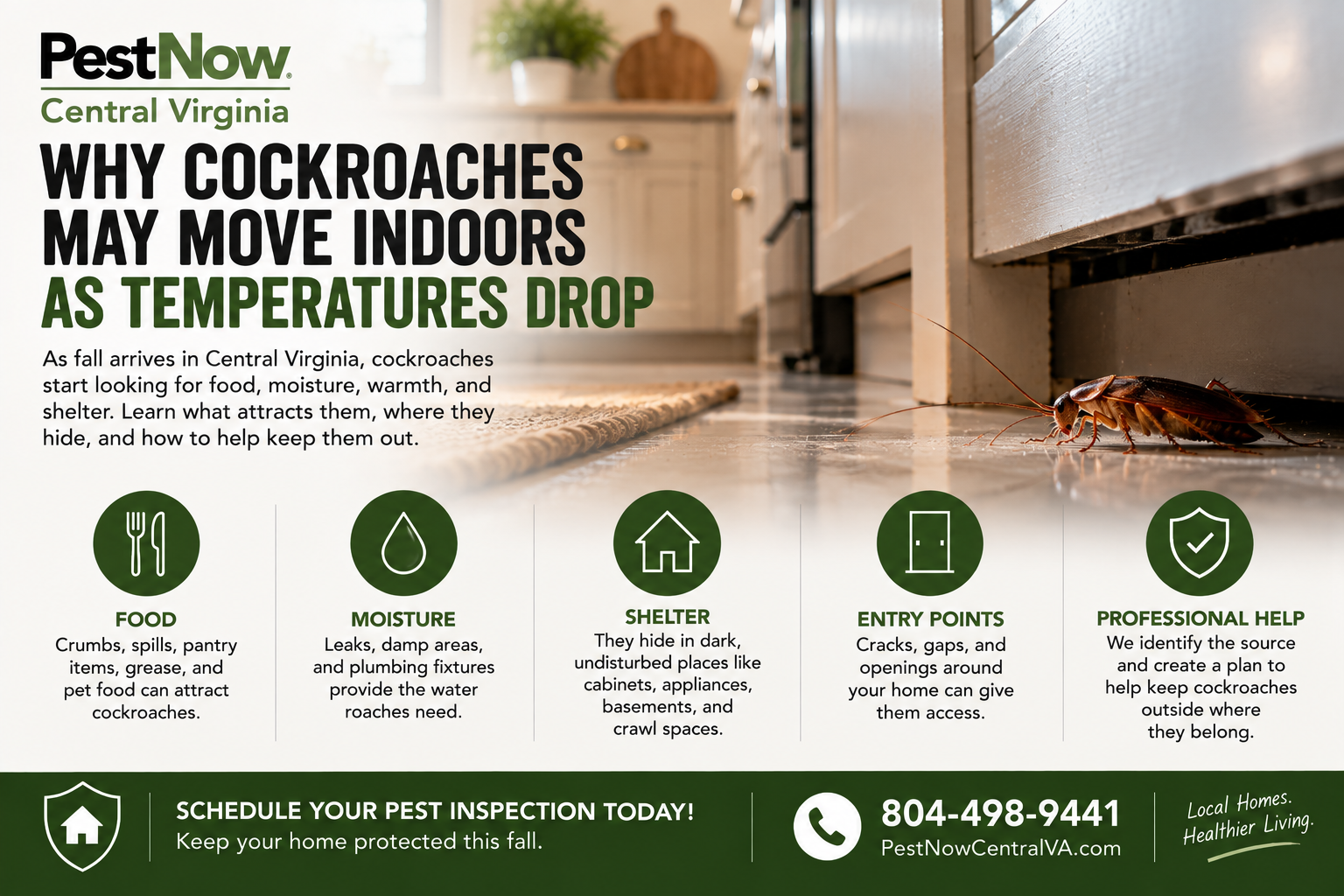
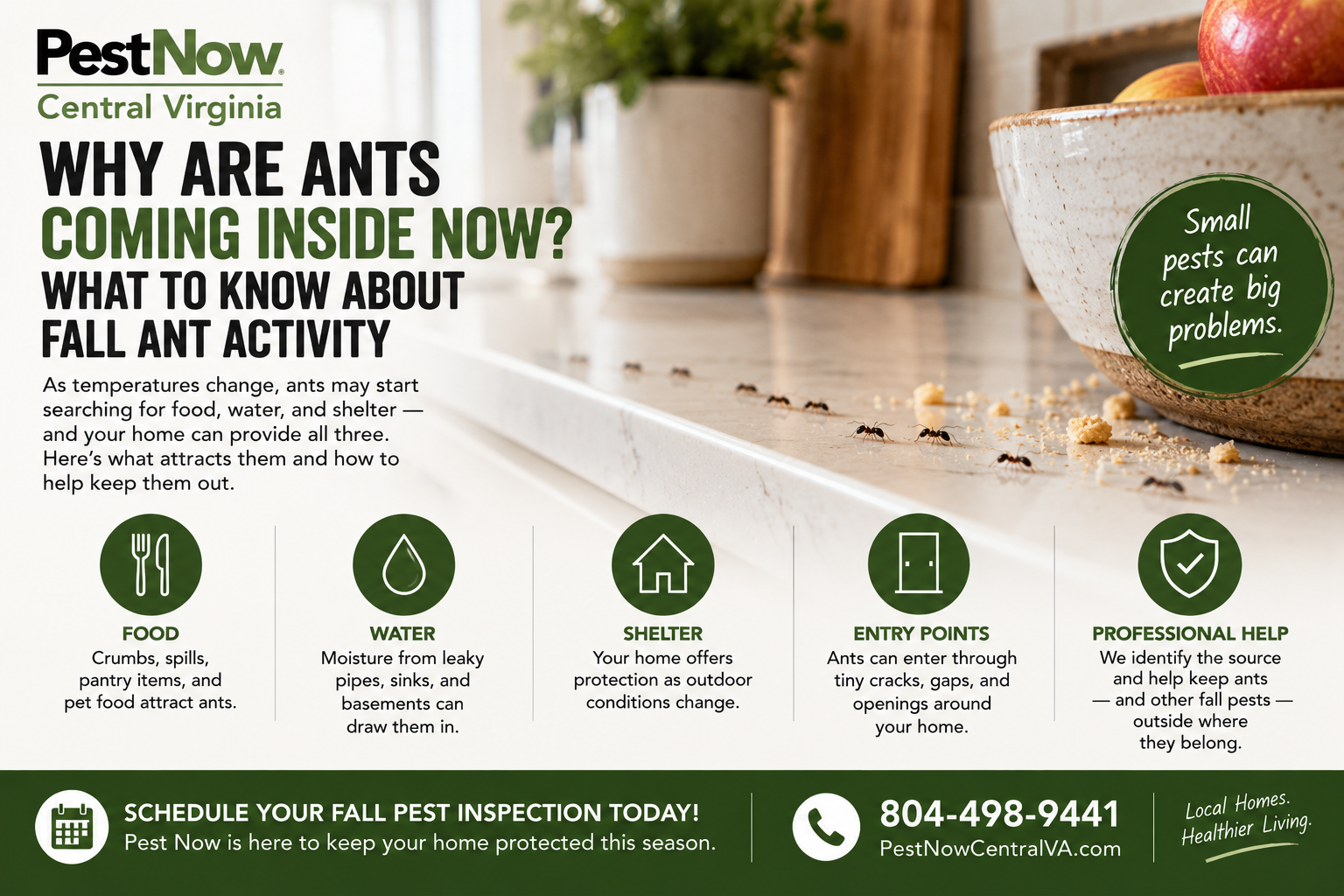
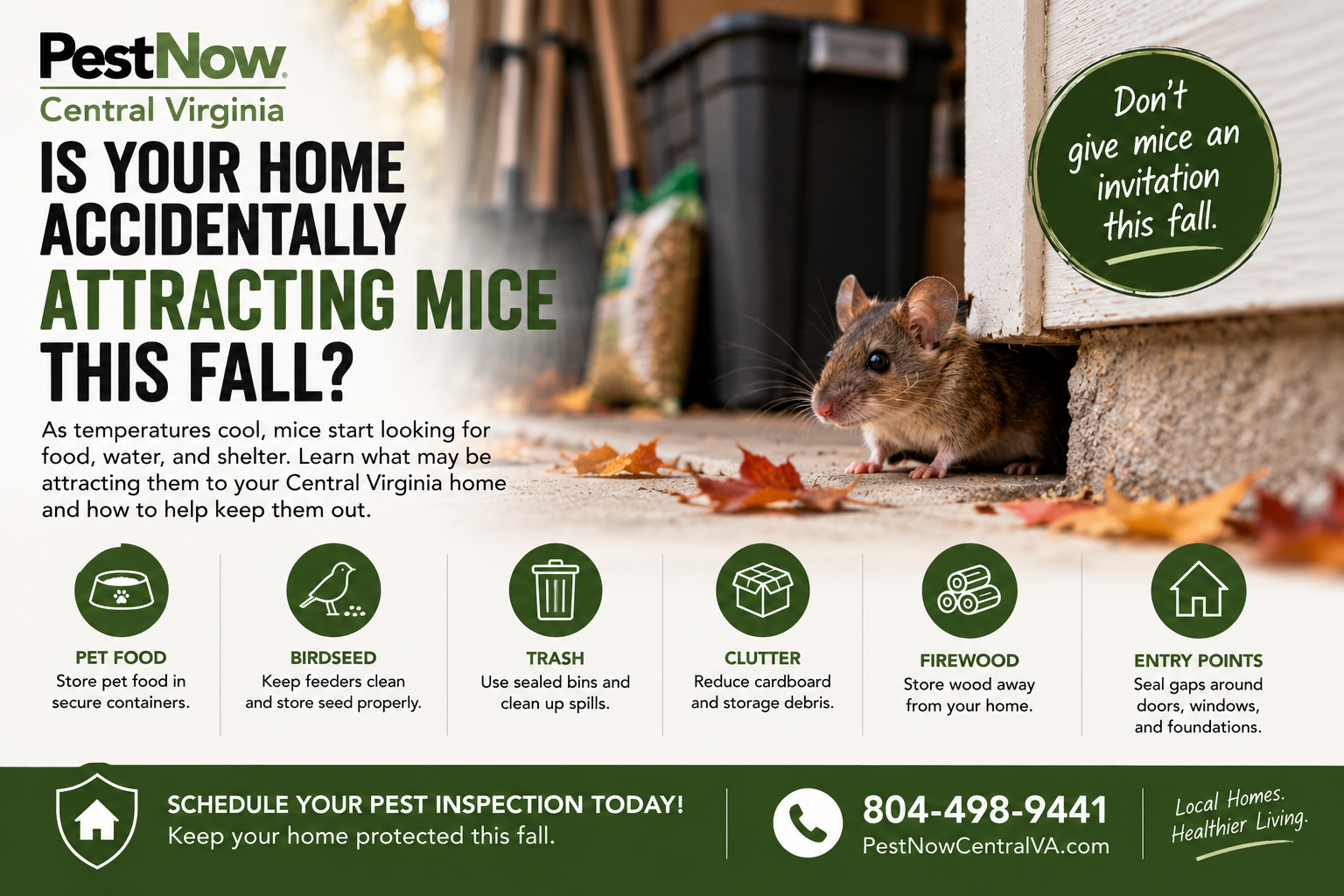
Late August in Central Virginia can still feel very much like summer, but the seasonal shift toward fall is getting closer. As temperatures eventually begin to cool, many of the pe...

Midlothian · Community Photo
Late August in Central Virginia can still feel very much like summer, but the seasonal shift toward fall is getting closer. As temperatures eventually begin to cool, many of the pests that have spent summer outdoors will start searching for dependable sources of food, water, and shelter.
Your home can provide all three.
The good news is that many pest problems can be prevented by identifying and addressing entry points before pests find them. If you want to get ahead of fall pest activity, Pest Now can inspect your home for potential problem areas and help create a prevention plan before unwanted guests start making their way indoors.
1. Gaps Around Doors
Your exterior doors may look secure, but even relatively small gaps can provide an opportunity for insects and rodents to enter.
Check the weather stripping around doors and pay close attention to the bottom corners. Garage doors deserve extra attention because worn seals can leave significant gaps along the floor.
If you can see daylight around a closed exterior door, it's worth addressing.
Replacing damaged weather stripping and door sweeps is a simple preventative step that can make your home less accessible to pests.
2. Windows and Damaged Screens
Late summer often means opening windows when cooler evenings finally arrive. Unfortunately, damaged screens can provide easy access for mosquitoes, flies, spiders, and other insects.
Inspect screens for:
- Small tears
- Loose edges
- Gaps around the frame
- Missing screens
Also check the exterior edges of windows for cracks or deteriorating seals.
3. Utility and Plumbing Openings
Pipes, cables, HVAC lines, and other utilities have to enter your home somewhere.
The openings created for them aren't always completely sealed, particularly in older homes or after repairs and renovations.
Look closely around exterior faucets, HVAC connections, cable lines, plumbing penetrations, and dryer vents. Small gaps around these areas can provide surprisingly convenient pathways indoors.
4. Your Foundation
Foundation cracks aren't just something to watch from a home-maintenance perspective. They can also provide hiding places and entry points for pests.
Walk around the perimeter of your home and look for visible cracks or gaps.
Pay particular attention to areas near:
- Crawl space entrances
- Basement windows
- Utility lines
- Exterior vents
- Steps and porches
If you're unsure whether a crack requires repair, have it professionally evaluated rather than simply covering it.
5. Attic and Roofline Openings
Homeowners tend to focus on pests entering at ground level, but some unwanted visitors can get in much higher.
Damaged vents, gaps around rooflines, loose soffits, and other exterior openings may provide access to attics.
Attics offer exactly what many pests want as fall approaches: warmth, protection, and relatively little human activity.
Regularly inspecting your roofline can help catch potential issues before they become an indoor pest problem.
6. Crawl Spaces
Crawl spaces are another area that shouldn't be overlooked.
Moisture, damaged vents, gaps around access doors, and deteriorating materials can make crawl spaces especially appealing to insects and rodents.
Because homeowners don't typically spend much time beneath their houses, pest activity can continue unnoticed.
Signs of a potential problem include droppings, damaged insulation, nesting materials, unusual odors, moisture, or an increase in insects inside the home.
Your Landscaping Can Create a Bridge
Sometimes pests don't need to travel very far to reach your house.
Tree branches touching the roof, shrubs growing against siding, heavy mulch against the foundation, and stacked firewood beside the house can all provide shelter or pathways closer to your home's exterior.
As you begin preparing your yard for fall, consider:
- Trimming branches away from the roof
- Cutting shrubs back from siding
- Moving firewood away from the house
- Removing leaves and debris near the foundation
- Keeping gutters and downspouts clear
These small changes can make your property less inviting.
Why Late Summer Prevention Matters
Waiting until you hear scratching in the attic or find insects gathering indoors means pests have already crossed the barrier you're trying to protect.
Late August provides an opportunity to get ahead of the problem.
Inspecting your exterior now allows you to identify damaged seals, cracks, moisture problems, and other vulnerabilities while many pests are still primarily outdoors.
And because every home is different, a professional inspection can help uncover potential entry points that aren't always obvious.
Keep Pests Outside This Fall
You don't need to wait for cooler temperatures to start thinking about fall pest prevention. A little work now can make a significant difference when insects and rodents begin looking for warmer places to spend the season.
If you're unsure where pests could be entering your home, contact Pest Now today to schedule an inspection. Our team can identify potential entry points, look for signs of current pest activity, and help protect your Central Virginia home before fall arrives.Every Thursday — local news, events, deals, and new listings. Free forever.