Why You’re Seeing More Ants in Your House Right Now
If you’ve recently noticed ants in your kitchen, bathroom, or along your baseboards, you’re not alone. Late winter and early spring are one of the most common times for homeowners...
Midlothian · Community Photo
If you’ve recently noticed ants in your kitchen, bathroom, or along your baseboards, you’re not alone. Late winter and early spring are one of the most common times for homeowners in Central Virginia to start seeing ants indoors—and it often feels like they appear out of nowhere.
The reality is, ants don’t suddenly show up overnight. They’ve likely been nearby for a while, and seasonal changes are now driving them inside. If you’re seeing ants in your home, now is the time to act—Pest Now can identify the source and stop the problem before it turns into a full infestation.
Why Ants Come Inside This Time of Year
As temperatures begin to fluctuate in late winter, ant colonies start becoming more active. While it may still feel cold outside, ants are already preparing for spring.
Here’s what’s happening:
- Colonies begin to grow and expand
- Food sources outdoors are limited
- Temperature swings push ants indoors
- Worker ants are sent out to find food
Once they find a reliable food source in your home, they leave a scent trail—bringing more ants with them.
What Attracts Ants Into Your Home
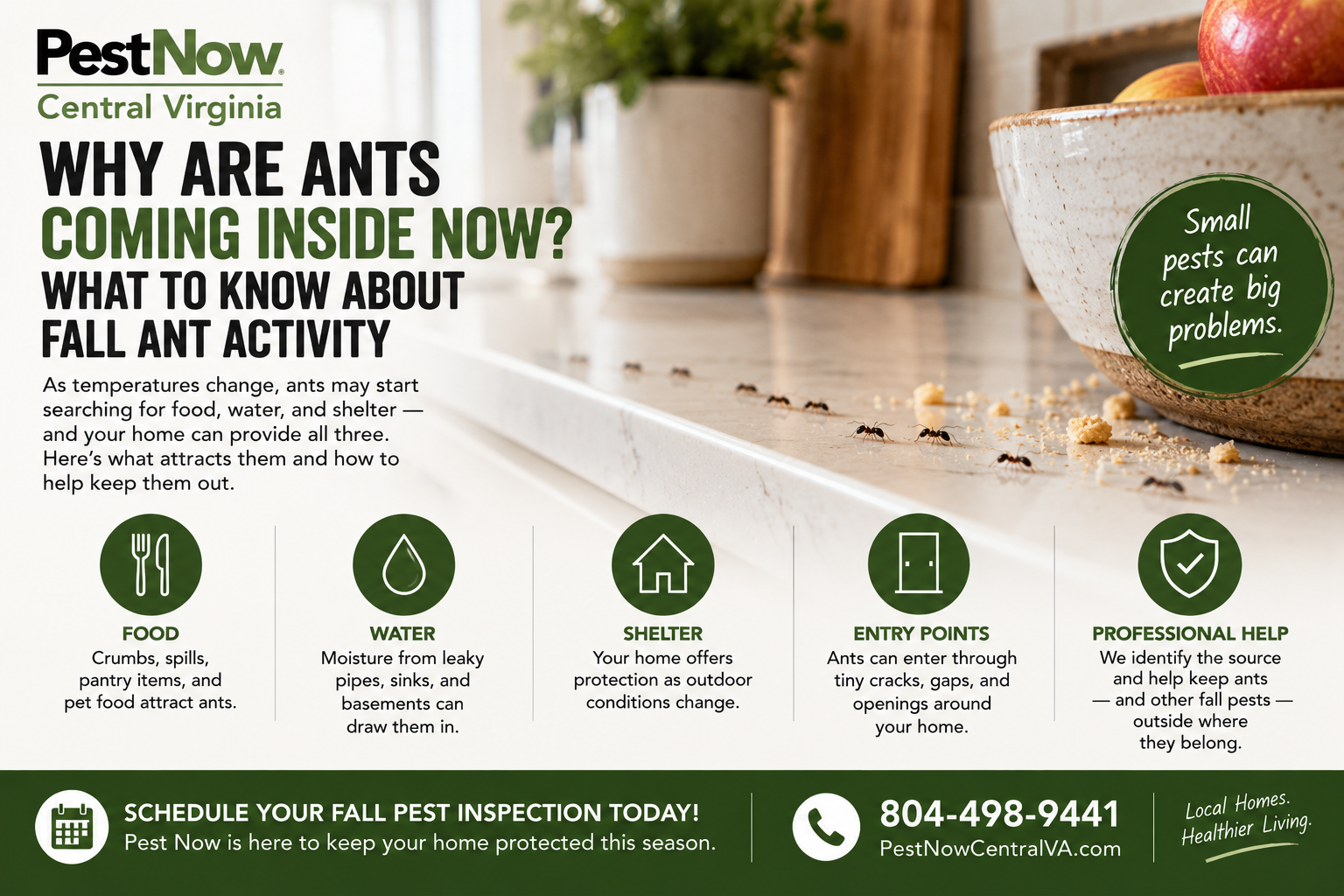
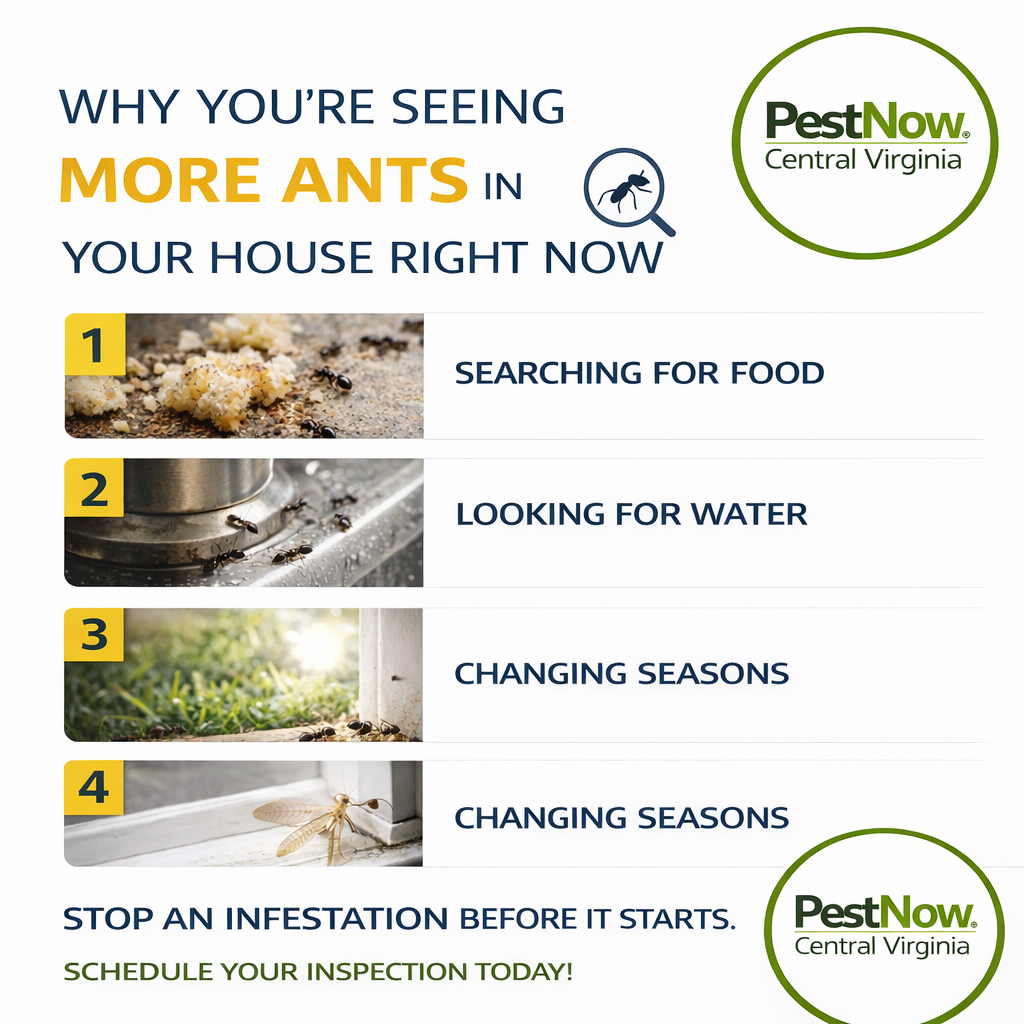
Ants are simple: they’re looking for food, water, and shelter. Even small things can attract them.
Common attractants include:
- Crumbs on floors or counters
- Pet food left out
- Sticky spills or residue
- Open pantry items
- Moisture around sinks or pipes
Even a tiny food source can lead to a steady stream of ants entering your home.
Why You Keep Seeing Them in the Same Spot
If you notice ants showing up in the same place over and over, it’s not random. Ants follow scent trails left by other ants, which leads them back to the same food source again and again.
That’s why wiping them away doesn’t solve the problem—you’re only removing the visible ants, not the colony.
Where Ants Are Coming From
Most ants enter homes through very small openings. You may not even notice where they’re getting in.
Common entry points include:
- Cracks in foundations
- Gaps around windows and doors
- Utility line openings
- Crawl spaces
- Baseboard gaps
Once inside, they stay close to food and water sources.
Why Ant Problems Get Worse Quickly
Ant colonies can grow rapidly. What starts as a few ants can turn into a larger infestation in a short period of time.
If ignored:
- Colonies continue to expand
- Multiple entry points may develop
- Ants spread to new areas of the home
- The problem becomes harder to control
Early action is the key to preventing a bigger issue.
How to Reduce Ant Activity Right Now
There are a few simple steps you can take to reduce ant activity:
- Clean surfaces and remove food residue
- Store food in sealed containers
- Fix leaks and eliminate moisture
- Take out trash regularly
- Seal visible cracks and entry points
While these steps help, they don’t eliminate the colony itself—which is why ants often come back.
Why Professional Treatment Works
The most effective way to stop ants is to target the source colony—not just the ants you see.
Pest Now:
- Identifies where ants are entering
- Locates and treats the colony
- Applies targeted treatments
- Helps prevent future infestations
This approach eliminates the problem at its source instead of just managing symptoms.
Don’t Let a Small Ant Problem Grow
Seeing ants now is often the first sign of a larger issue developing behind the scenes. As spring approaches, ant activity will only increase.
If you’re noticing ants in your home, contact Pest Now today to schedule an inspection and stop the problem before it spreads. Early treatment saves time, money, and frustration.
Every Thursday — local news, events, deals, and new listings. Free forever.